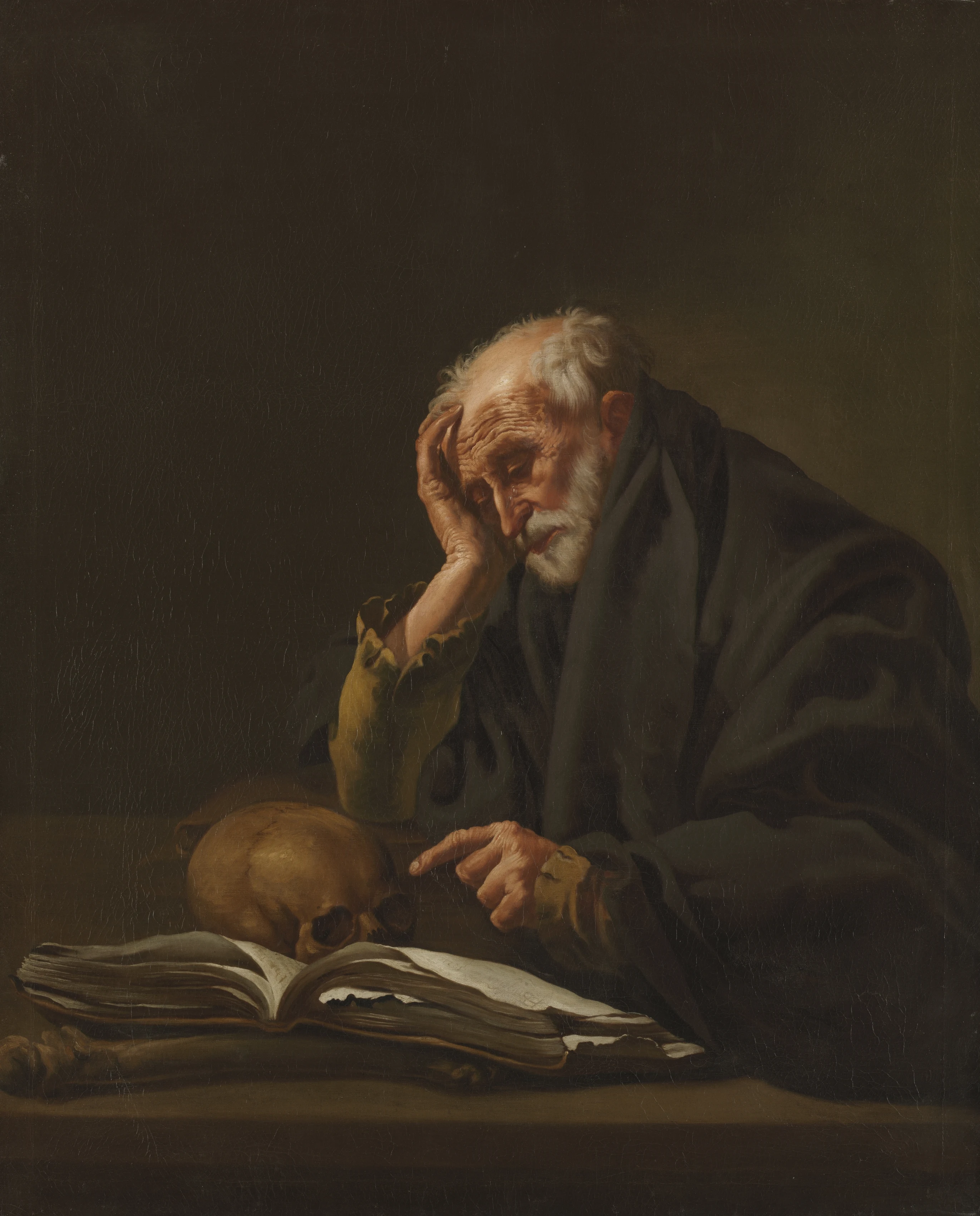
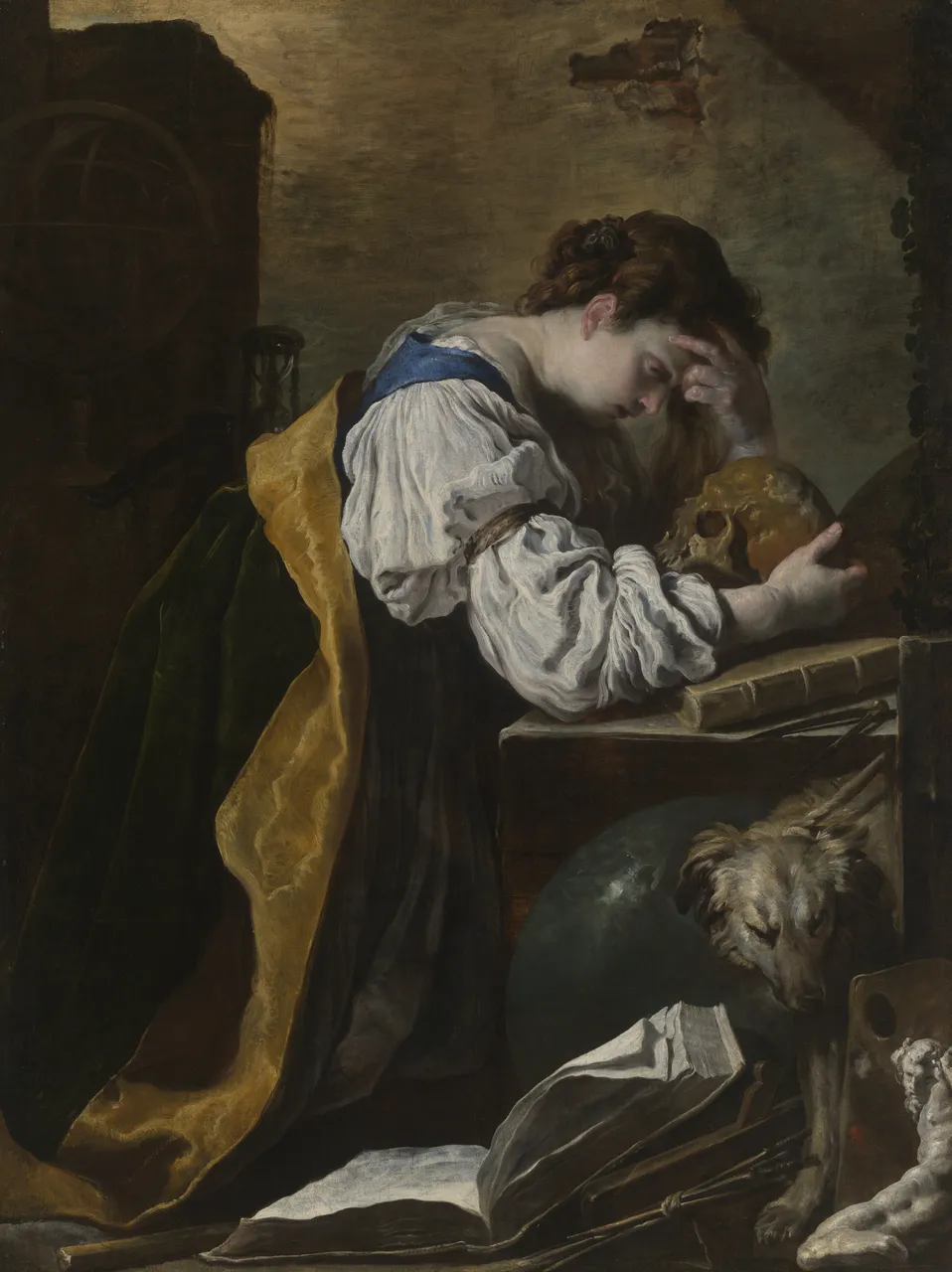
Painted around 1621, this work depicts Saint Jerome, one of the four great Doctors of the Latin Church, best known for his translation of the Bible into Latin, known as the Vulgate. The saint appears in deep meditation before an open book and a human skull, a symbol of life's brevity and the inevitability of death. His tears seem to express remorse and penitence. Interestingly, for many years the Cleveland Museum of Art believed that the figure represented the Greek philosopher Heraclitus, traditionally portrayed weeping over human suffering. However, the absence of a globe, a common attribute of Heraclitus, and the presence of the book and skull led the museum to identify the figure as Saint Jerome. The painting exemplifies Ter Brugghen's style, characterized by dramatic lighting and an intense portrayal of human emotions.
Pintada por volta de 1621, a obra representa São Jerônimo, um dos quatro grandes Doutores da Igreja Latina, conhecido sobretudo por sua tradução da Bíblia para o latim, chamada Vulgata. O santo aparece em profunda meditação, diante de um livro aberto e de um crânio humano, símbolo da brevidade da vida e da inevitabilidade da morte. Suas lágrimas parecem expressar arrependimento e penitência. Curiosamente, durante muitos anos o Cleveland Museum of Art acreditou que a figura representasse o filósofo grego Heráclito, tradicionalmente retratado chorando pelas misérias humanas. Entretanto, a ausência do globo terrestre, atributo comum de Heráclito, e a presença do livro e do crânio levaram o museu a identificar o personagem como São Jerônimo. A obra é um exemplo do estilo de Ter Brugghen, marcado pelo uso dramático da luz e pela representação intensa das emoções humanas.
Pintada hacia 1621, esta obra representa a san Jerónimo, uno de los cuatro grandes Doctores de la Iglesia latina, conocido principalmente por su traducción de la Biblia al latín, llamada Vulgata. El santo aparece en profunda meditación ante un libro abierto y una calavera humana, símbolo de la brevedad de la vida y de la inevitabilidad de la muerte. Sus lágrimas parecen expresar arrepentimiento y penitencia. Curiosamente, durante muchos años el Cleveland Museum of Art creyó que la figura representaba al filósofo griego Heráclito, tradicionalmente retratado llorando por las miserias humanas. Sin embargo, la ausencia del globo terráqueo, atributo habitual de Heráclito, y la presencia del libro y la calavera llevaron al museo a identificar al personaje como san Jerónimo. La pintura es un ejemplo del estilo de Ter Brugghen, caracterizado por el uso dramático de la luz y la intensa representación de las emociones humanas.