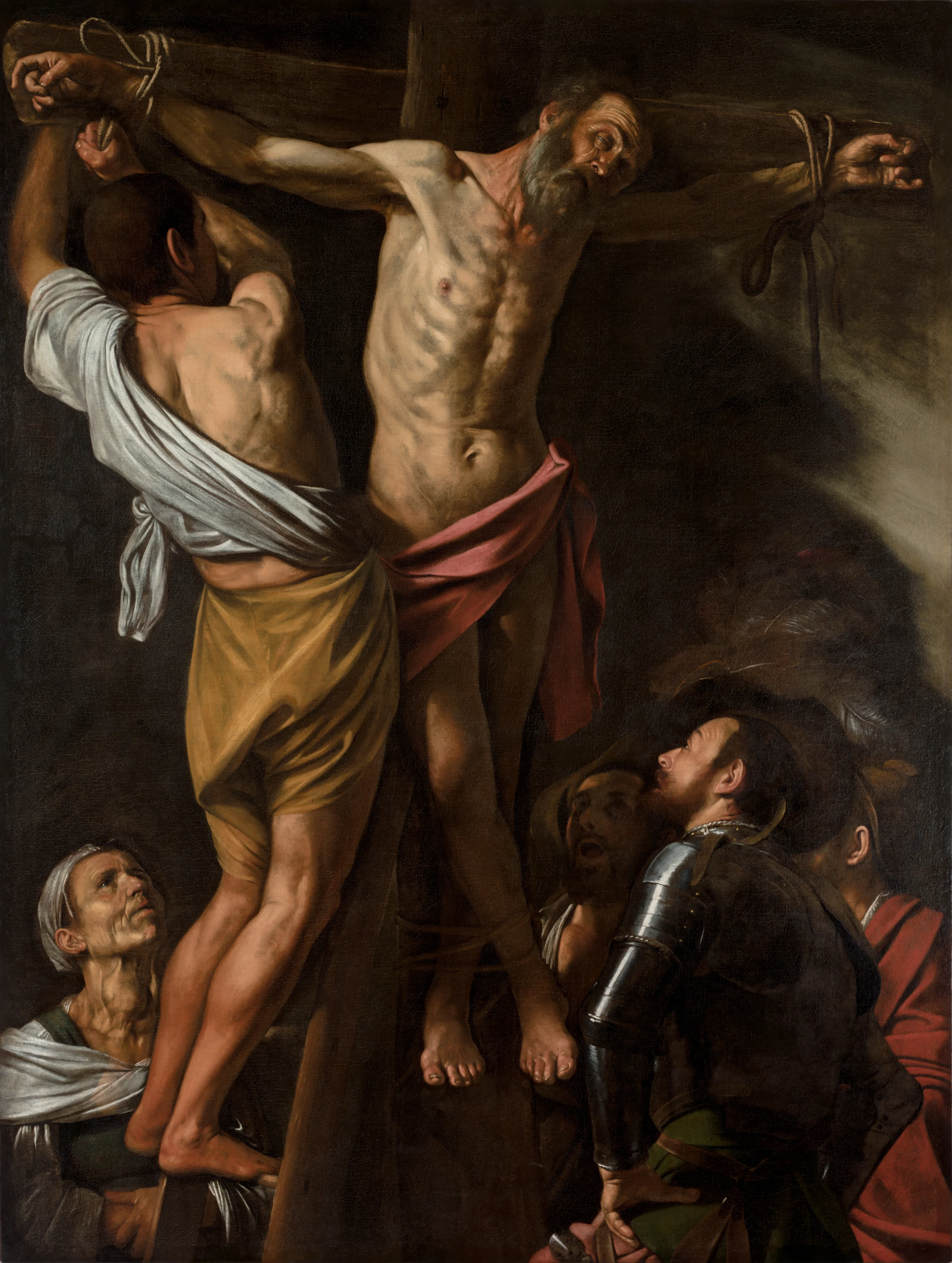
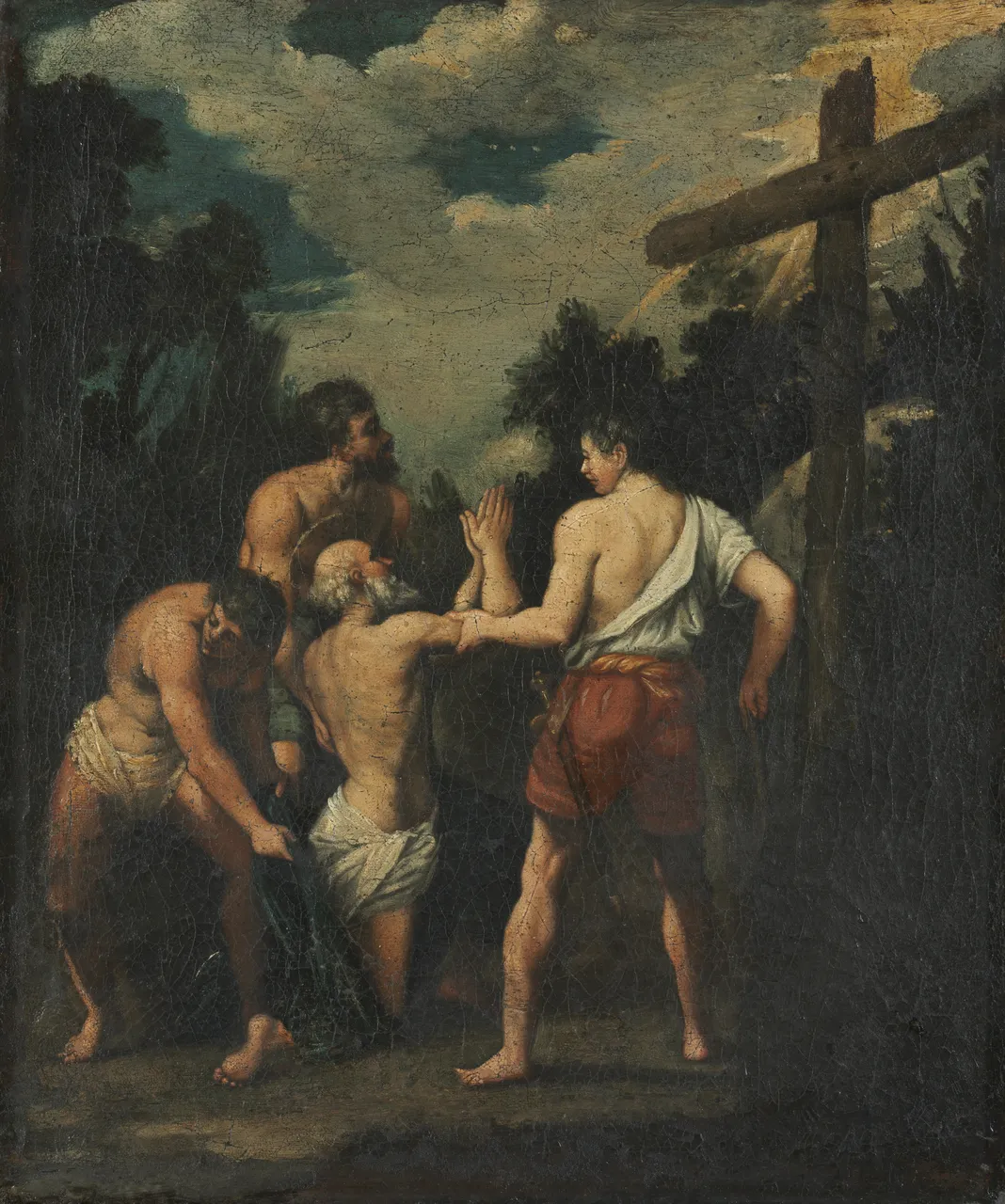
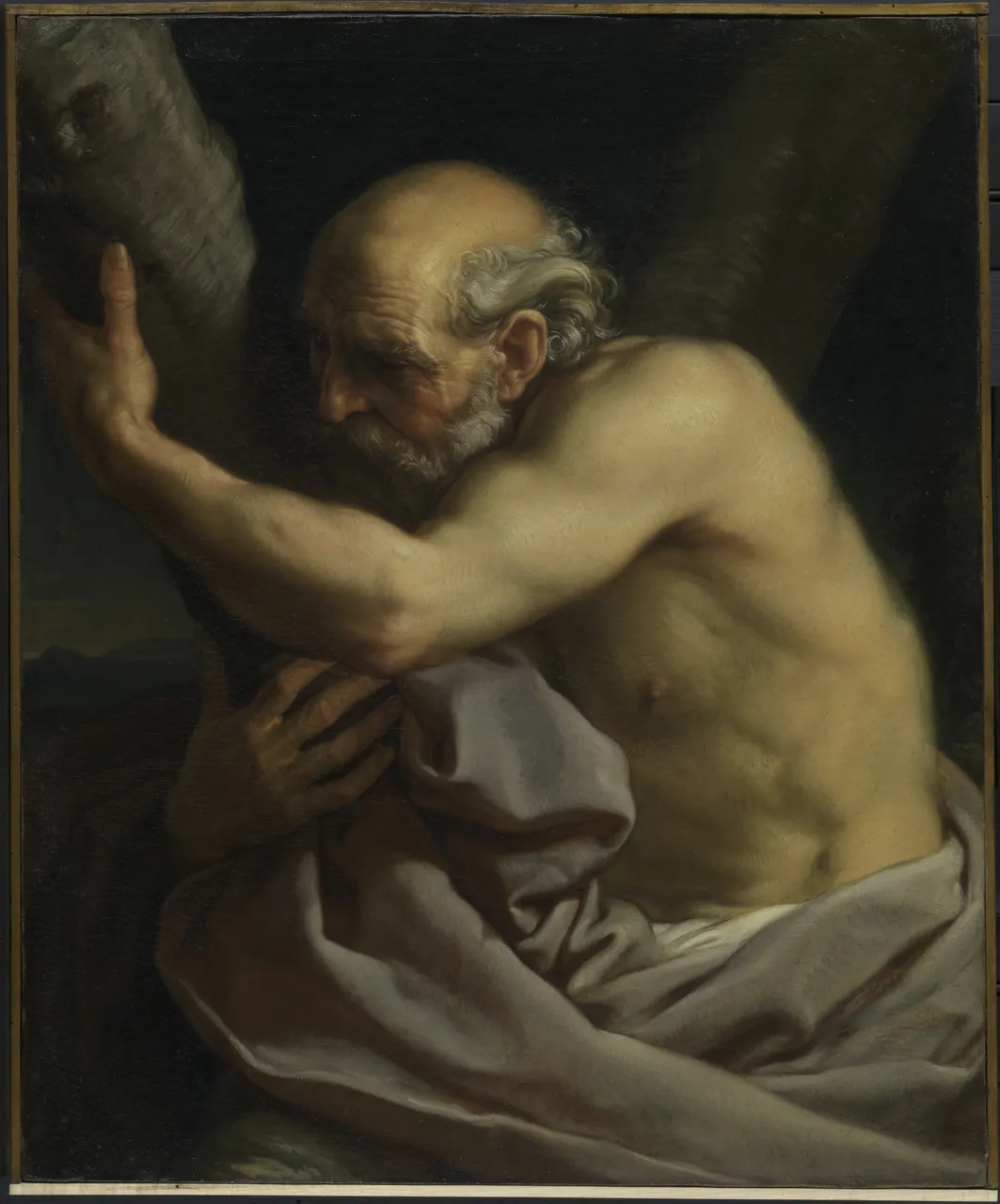
Saint Andrew’s efforts to introduce Christianity to Greece in the first century CE were met with hostility from local authorities. He was sentenced to die on the cross because he refused to acknowledge pagan gods. For two days, Andrew preached from his martyr’s station to an increasingly sympathetic crowd. Bowing to public demand, Andrew’s would-be executioners attempted to untie him, but their hands were mysteriously paralyzed. Andrew’s desire for martyrdom was thus fulfilled and he died enveloped in divine light. Caravaggio’s innovative interpretation involves the viewer more closely in the event by presenting the crucifixion as intimate and private, rather than as a gruesome public spectacle. Bold contrasts of light and dark suggest the presence of God. A masterpiece of Baroque painting, Caravaggio’s Crucifixion of Saint Andrew is the only altarpiece by the artist in America.
Os esforços de Santo André para introduzir o cristianismo na Grécia no primeiro século d.C. foram recebidos com hostilidade por parte das autoridades locais. Ele foi condenado a morrer na cruz porque se recusou a reconhecer deuses pagãos. Durante dois dias, André pregou do seu posto de mártir para uma multidão cada vez mais simpática. Curvando-se à exigência pública, os pretensos algozes de André tentaram desamarrá-lo, mas suas mãos ficaram misteriosamente paralisadas. O desejo de martírio de André foi assim satisfeito e ele morreu envolto na luz divina. A interpretação inovadora de Caravaggio envolve o espectador mais de perto no evento, apresentando a crucificação como algo íntimo e privado, em vez de um espetáculo público horrível. Contrastes ousados de luz e escuridão sugerem a presença de Deus. Obra-prima da pintura barroca, a Crucificação de Santo André, de Caravaggio, é o único retábulo do artista na América.
Los esfuerzos de San Andrés por introducir el cristianismo en Grecia en el siglo I d.C. encontraron hostilidad por parte de las autoridades locales. Fue sentenciado a morir en la cruz porque se negó a reconocer a los dioses paganos. Durante dos días, Andrés predicó desde su puesto de mártir ante una multitud cada vez más comprensiva. Cediendo a la demanda pública, los posibles verdugos de Andrew intentaron desatarlo, pero sus manos quedaron misteriosamente paralizadas. El deseo de Andrés de ser martirio se cumplió así y murió envuelto en la luz divina. La innovadora interpretación de Caravaggio involucra al espectador más estrechamente en el evento al presentar la crucifixión como íntima y privada, en lugar de como un espectáculo público espantoso. Los contrastes audaces de luz y oscuridad sugieren la presencia de Dios. Una obra maestra de la pintura barroca, la Crucifixión de San Andrés de Caravaggio es el único retablo del artista en América.