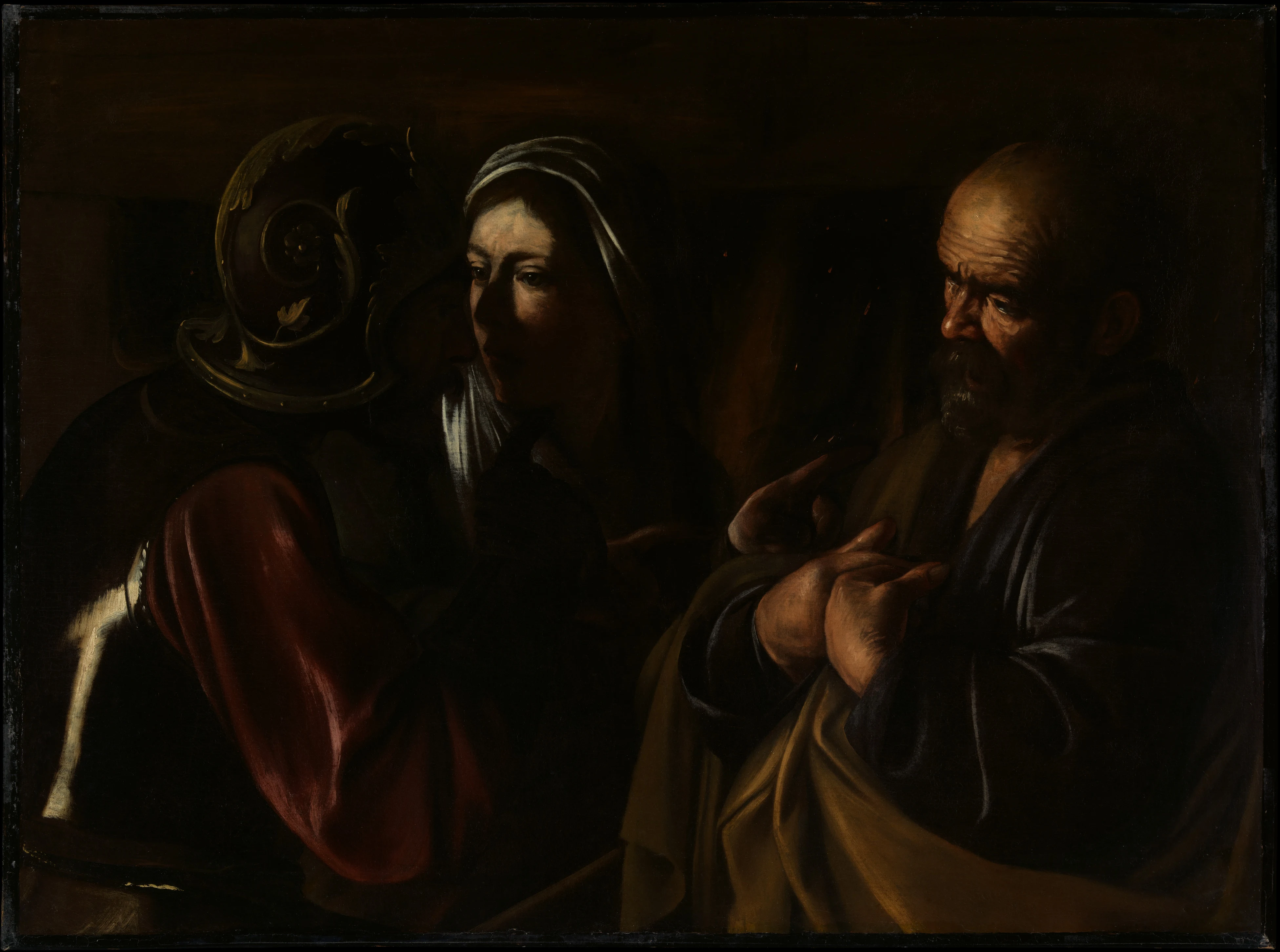
Painted in 1610, just months before Caravaggio's death, this work depicts the moment Saint Peter denies knowing Jesus following his arrest, as narrated in the Gospels (Mt 26:69–75; Mk 14:66–72; Lk 22:54–62; Jn 18:15–27). In the courtyard of the high priest, a woman accuses the apostle of being a disciple of Christ, while a soldier reinforces the accusation. A particularly interesting detail lies in the figures' gestures: the woman's two pointing fingers, together with the soldier's single finger, symbolize Peter's three accusations and three denials. With his hands turned toward his chest and an expression marked by fear and guilt, the apostle reveals the inner conflict of a man who, shortly before, had promised never to abandon his Master. Caravaggio eliminates almost all secondary elements, focusing attention on the faces, gestures, and contrast between light and darkness. Probably executed in Naples, this is one of the artist's final paintings and represents the last phase of his style, characterized by psychological intensity and simplicity of composition.
Pintada em 1610, poucos meses antes da morte de Caravaggio, a obra representa o momento em que São Pedro nega conhecer Jesus, após sua prisão, conforme narrado nos Evangelhos (Mt 26, 69-75; Mc 14, 66-72; Lc 22, 54-62; Jo 18, 15-27). No pátio do sumo sacerdote, uma mulher acusa o apóstolo de ser discípulo de Cristo, enquanto um soldado reforça a acusação. Um detalhe particularmente interessante está nos gestos dos personagens: os dois dedos apontados pela mulher, somados ao dedo do soldado, simbolizam as três acusações e as três negações de Pedro. Com as mãos voltadas para o próprio peito e uma expressão marcada pelo medo e pela culpa, o apóstolo revela o conflito interior daquele que, pouco antes, havia prometido jamais abandonar seu Mestre. Caravaggio elimina quase todos os elementos secundários, concentrando a atenção nos rostos, nos gestos e no contraste entre luz e escuridão. Realizada provavelmente em Nápoles, esta é uma das últimas pinturas do artista e representa a fase final de seu estilo, caracterizada pela intensidade psicológica e pela simplicidade da composição.
Pintada en 1610, pocos meses antes de la muerte de Caravaggio, esta obra representa el momento en que san Pedro niega conocer a Jesús después de su arresto, según narran los Evangelios (Mt 26, 69-75; Mc 14, 66-72; Lc 22, 54-62; Jn 18, 15-27). En el patio del sumo sacerdote, una mujer acusa al apóstol de ser discípulo de Cristo, mientras un soldado refuerza la acusación. Un detalle especialmente interesante se encuentra en los gestos de los personajes: los dos dedos señalados por la mujer, sumados al dedo del soldado, simbolizan las tres acusaciones y las tres negaciones de Pedro. Con las manos dirigidas hacia su propio pecho y una expresión marcada por el miedo y la culpa, el apóstol revela el conflicto interior de quien, poco antes, había prometido no abandonar jamás a su Maestro. Caravaggio elimina casi todos los elementos secundarios, concentrando la atención en los rostros, los gestos y el contraste entre luz y oscuridad. Realizada probablemente en Nápoles, esta es una de las últimas pinturas del artista y representa la fase final de su estilo, caracterizada por la intensidad psicológica y la sencillez de la composición.