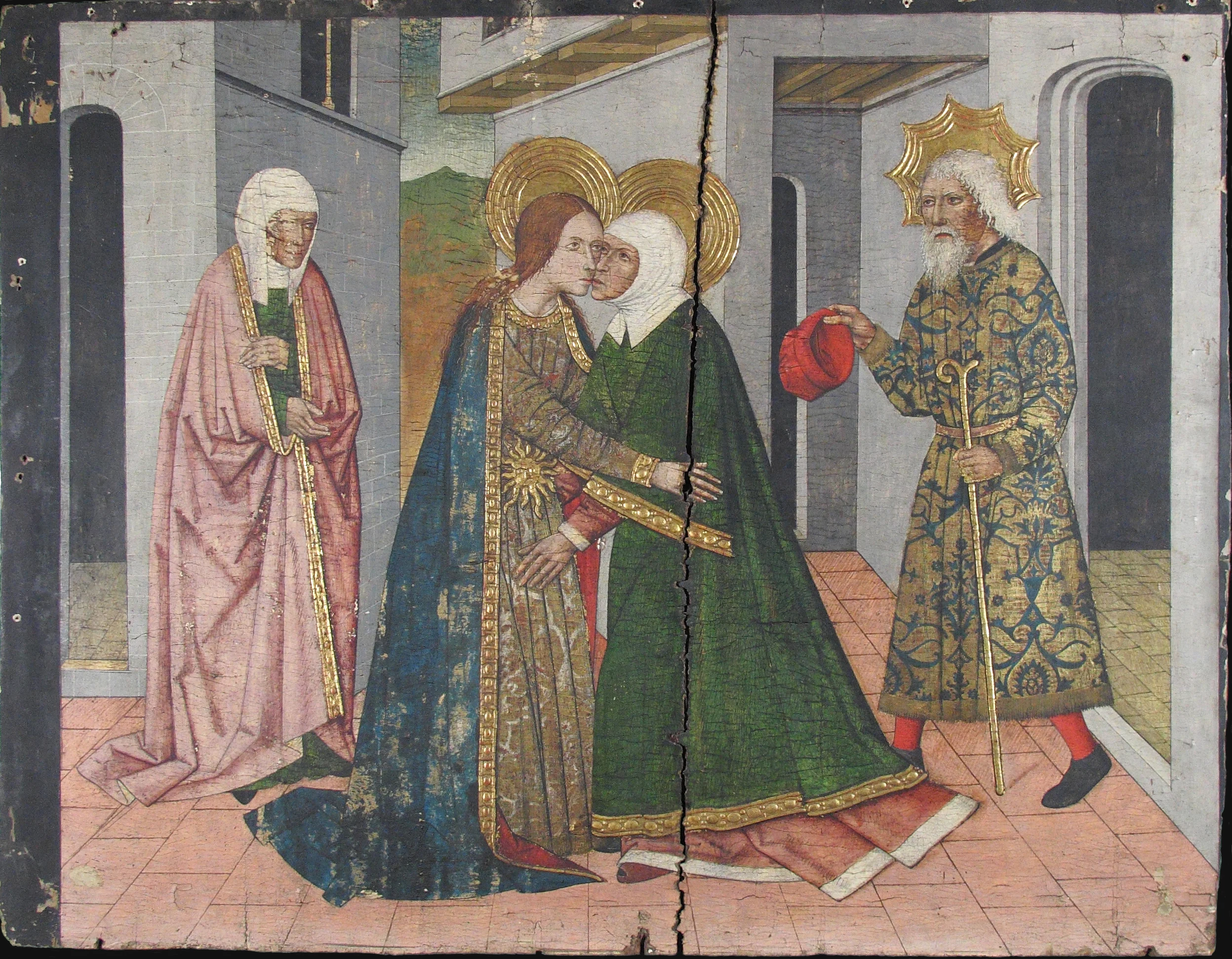
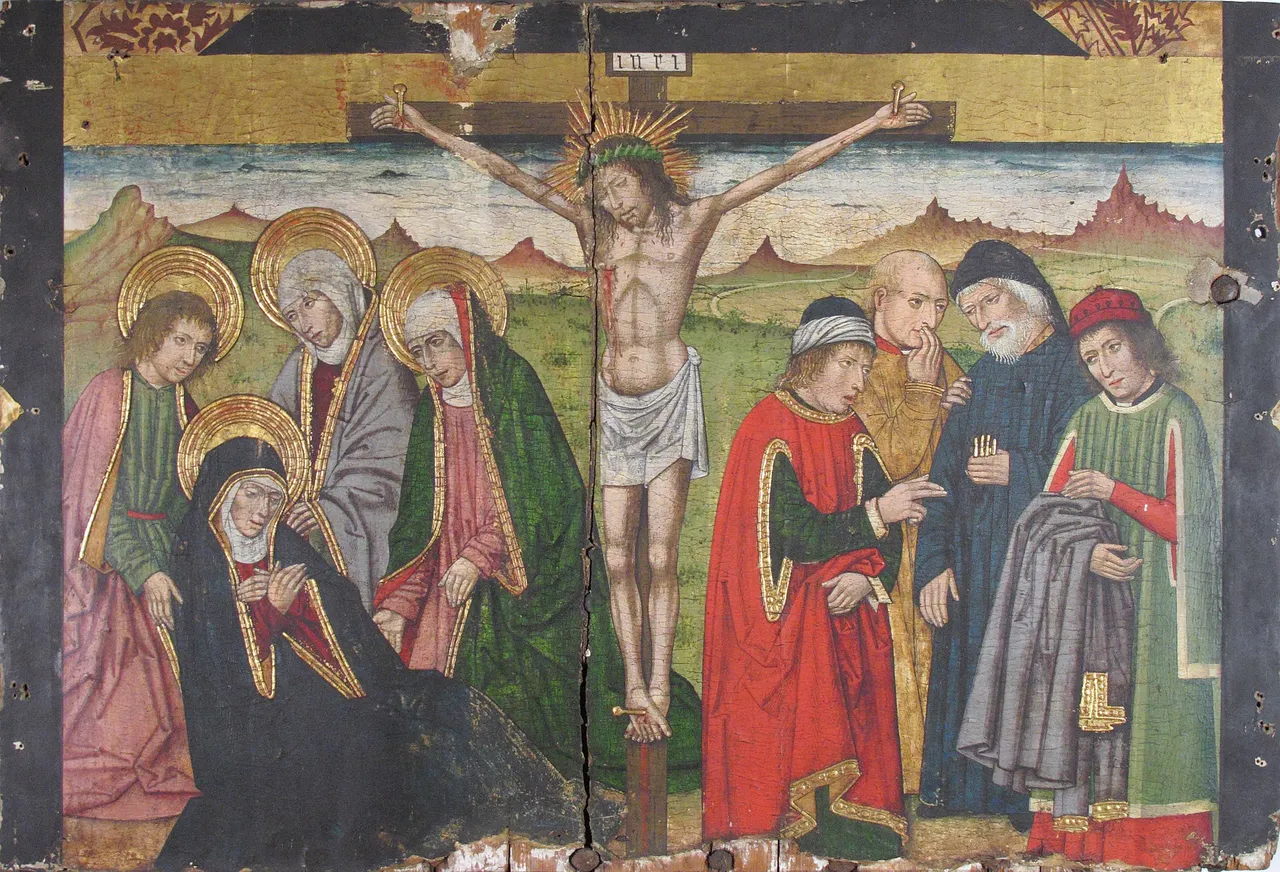
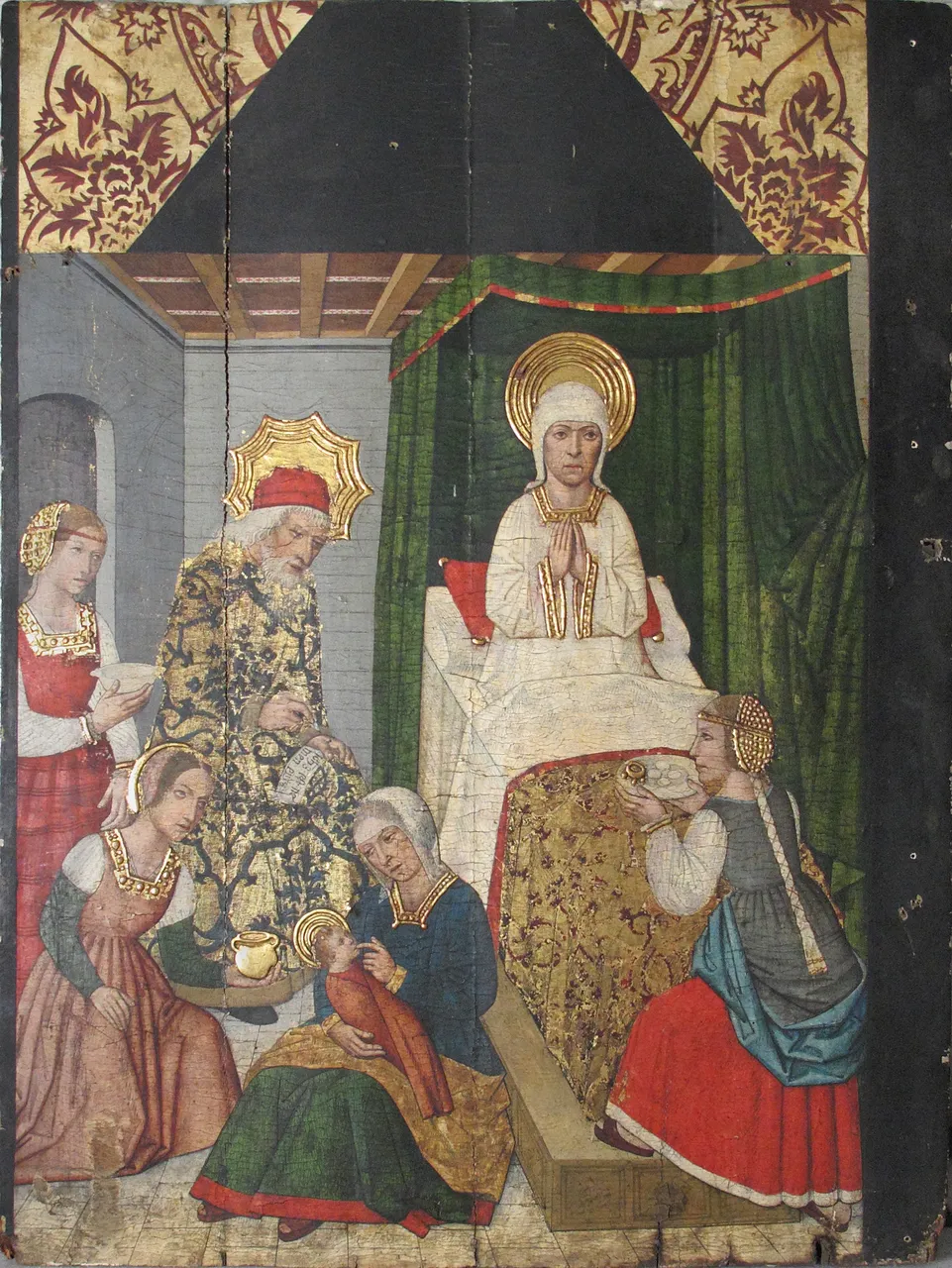
Created in Aragon, Spain, during the 15th century, this painting depicts the Visitation of the Virgin Mary to Saint Elizabeth, as narrated in the Gospel of Saint Luke (Lk 1:39–56). After receiving the announcement that she would become the Mother of the Savior, Mary visits her relative Elizabeth, who is pregnant with Saint John the Baptist. Upon hearing Mary's greeting, the child leaps for joy in his mother's womb, and Elizabeth, filled with the Holy Spirit, recognizes Mary as the Mother of the Lord. The scene is set in a residence featuring late medieval architecture, and the painter included additional figures in the encounter, including an elderly man holding a staff, possibly Saint Zechariah, Elizabeth's husband. Originally, the painting formed part of a large altarpiece dedicated to Saint John the Baptist, occupying the central section above the image of the saint enthroned and below the Crucifixion. These three panels, together with other scenes from the Baptist's life, are now preserved at the Metropolitan Museum of Art. The work displays characteristics of Aragonese Gothic painting, including richly decorated garments, golden halos, and expressive gestures.
Produzida em Aragão, na Espanha, durante o século XV, esta pintura representa a Visitação da Virgem Maria a Santa Isabel, narrada no Evangelho de São Lucas (Lc 1, 39-56). Após receber o anúncio de que seria a Mãe do Salvador, Maria visita sua parenta Isabel, que estava grávida de São João Batista. Ao ouvir a saudação de Maria, o menino estremece de alegria no ventre de sua mãe, e Isabel, cheia do Espírito Santo, reconhece Maria como a Mãe do Senhor. A cena foi ambientada em uma residência com características arquitetônicas do final da Idade Média, e o pintor acrescentou outros personagens ao encontro, incluindo um homem idoso com cajado, possivelmente São Zacarias, marido de Isabel. Originalmente, a pintura integrava um grande retábulo dedicado a São João Batista, ocupando a parte central do conjunto, acima da imagem do santo entronizado e abaixo da Crucificação. Esses três painéis, juntamente com outras cenas da vida do Batista, estão atualmente conservados no Metropolitan Museum of Art. A obra apresenta características da pintura gótica aragonesa, como as vestes ricamente ornamentadas, as auréolas douradas e a expressividade dos gestos.
Realizada en Aragón, España, durante el siglo XV, esta pintura representa la Visitación de la Virgen María a santa Isabel, narrada en el Evangelio de san Lucas (Lc 1, 39-56). Después de recibir el anuncio de que sería la Madre del Salvador, María visita a su pariente Isabel, que estaba embarazada de san Juan Bautista. Al escuchar el saludo de María, el niño salta de alegría en el vientre de su madre, e Isabel, llena del Espíritu Santo, reconoce a María como la Madre del Señor. La escena está ambientada en una residencia con características arquitectónicas de finales de la Edad Media, y el pintor añadió otros personajes al encuentro, entre ellos un anciano con bastón, posiblemente san Zacarías, esposo de Isabel. Originalmente, la pintura formaba parte de un gran retablo dedicado a san Juan Bautista, ocupando la sección central, sobre la imagen del santo entronizado y debajo de la Crucifixión. Estos tres paneles, junto con otras escenas de la vida del Bautista, se conservan actualmente en el Metropolitan Museum of Art. La obra presenta características de la pintura gótica aragonesa, como las vestiduras ricamente ornamentadas, las aureolas doradas y la expresividad de los gestos.